
(Presented at the Rivers of Change symposium on Nov. 13, 2025)
One of my greatest pleasures in life is to float in a boat in a place where running water isn’t always present, whether it’s riding a monsoonal flood down an otherwise dry wash, or hooting and hollering in sand waves where there’s supposed to be a stagnant reservoir. We’re going to spend the next ten minutes in a place that ticks both of these boxes, and that's the lower Dirty Devil River.
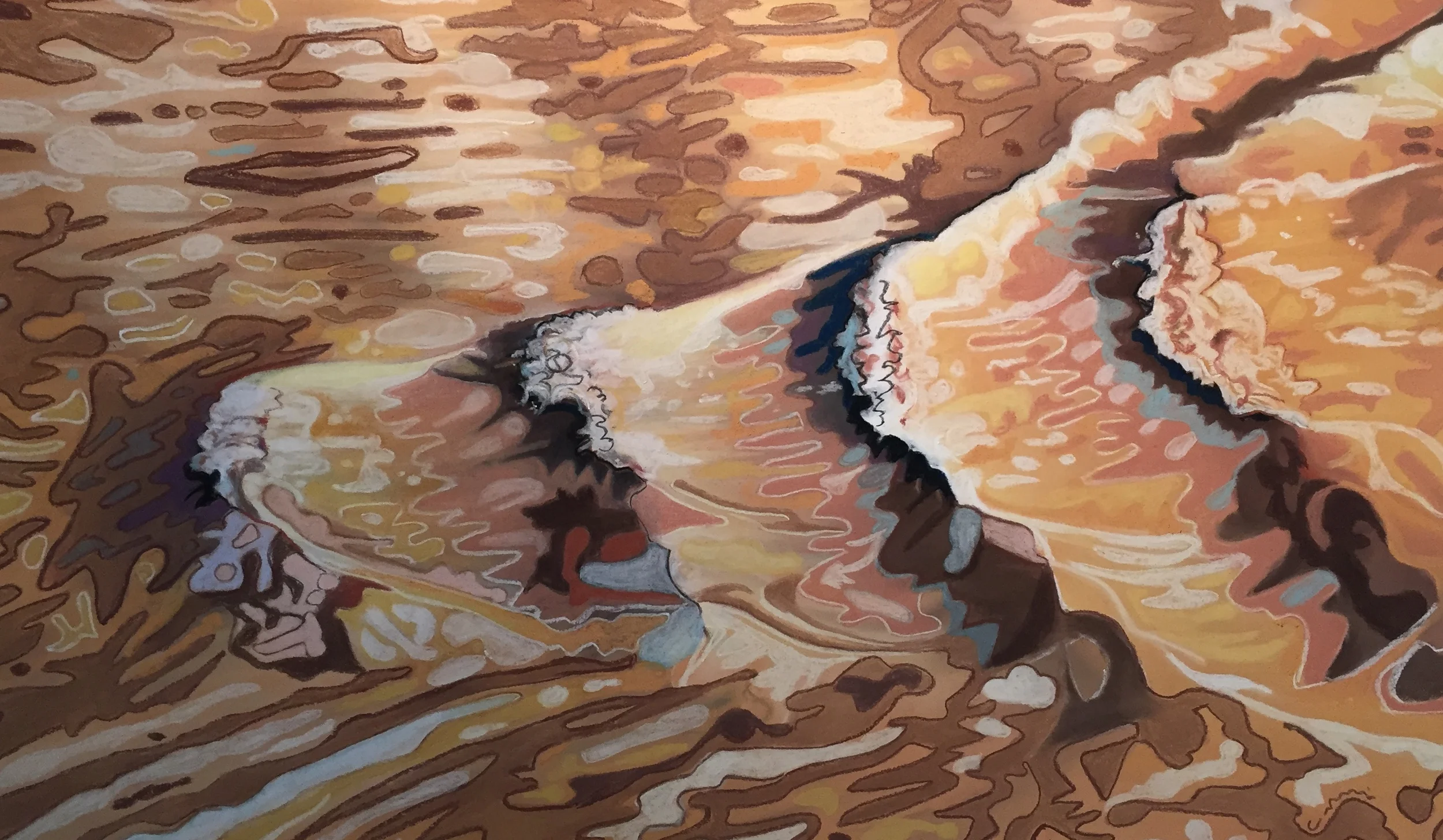
genesis - 2015
Another source of pleasure is making art from these experiences. This is a pastel drawing of a nice little set of sand waves on the Dirty Devil. It’s called “genesis.” All of the art here is made with soft pastels and these big ass hands. ow
My first trip in the high desert was actually at Lake Powell. I was 10 or so. When I think back to it, the main image that comes to mind is my Dad zipping around in a little sailboat with a brightly colored spinnaker. I just thought it was the most lovely thing in the world, everything so vivid - the blue, the green, the red, my dad’s joyful sail. I don't think I knew anything about Glen Canyon Dam and didn’t think to ask. I didn't really have enough information to form an opinion about it. But the palette of the place activated my artistic energy.
When I was in college, I started mucking around the high desert quite a lot, hiking and boating, and one of the first places I went was the Dirty Devil for a backpacking trip. I remember crossing the shallow river several times and wondering if it was possible to ever float this little thing in a boat. And I just kind of tucked that question away and focused on other things.
I was marinating in a lot of Colorado Plateau-specific environmental writing at that time. The usual suspects. Through that process, I came to hate the place I had enjoyed as a ten-year old. And came to see the reservoir as a permanent thing. That the loss of what lay below was also permanent. That I wouldn’t be visiting those places in my lifetime. I didn’t think very critically about it. I instead issued a pissed-off goodbye to the place.
My first glimpse that the reservoir was a dynamic, fluctuating, impermanent, and drying-up thing was in 2003, while giggling in delight with my newly wed bride Emily while we ripped through a Dominy canyon within Narrow Canyon all the way to Hite on 25,000 cubic feet of the good stuff.
Several years later, a buddy and I managed to pull off a run of the Dirty Devil. We launched just downstream of Hanksville in duckies and took out just above the confluence with the Colorado. It was incredible. Not a ton of water, definitely in and out of our boats a lot, but awesome.
Having just enough water to sneak through a large canyon system felt magical. I started getting attached to ephemeral bodies of water. It felt like I was getting away with something, but in a positive way. I was rejecting just wasting away a day doing bullshit and instead out here catching something that was only going to happen for a short while. I was hooked.
But something I wasn't aware of, and what stopped me in my tracks when I first saw it on our first Dirty Devil trip, was these seeps that form near the river’s edge, leaching through the porous Cedar Mesa sandstone.
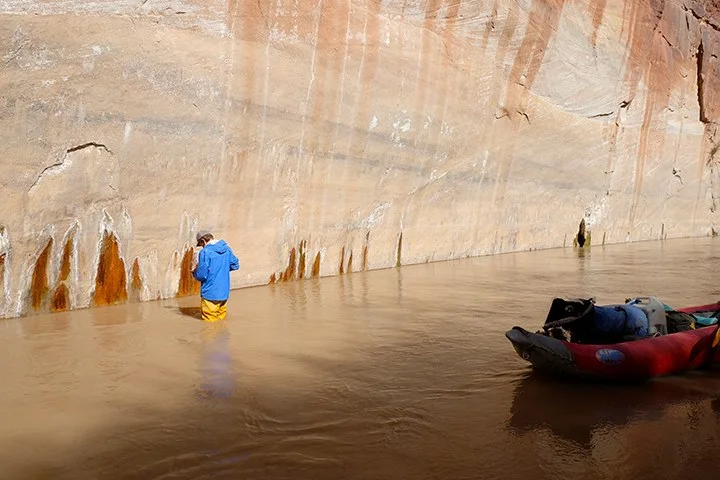
3/31/2014
I was just mesmerized by the forms that were created by these seeps. They reminded me of Barrier Canyon Style figures, the pictograph forms that we see around the Colorado Plateau. I saw them as being full of story, full of narrative. I viewed them as expressive, and started using them as a language to process and articulate what I was experiencing in life. And the fact that they were reflected in the little river as it raced by blew my aesthetic mind.
I fell madly in love with these rather small details in an otherwise grandiose, overwhelming landscape. And that's when I narrowed my focus with my art from the ever-popular and more commercially palatable fifty mile view to the five foot view. To celebrate the small, quiet moments that are happening whether we’re there to see them or not.
So, here's a shot of me that 1st trip. I just had to hop out of my boat and set up shop there for as long as I could, occasionally apologizing to my trip mate for the delay. And this is where I did my 1st on-site drawing of these seeps. Pretty quick, pretty simple, pretty basic…
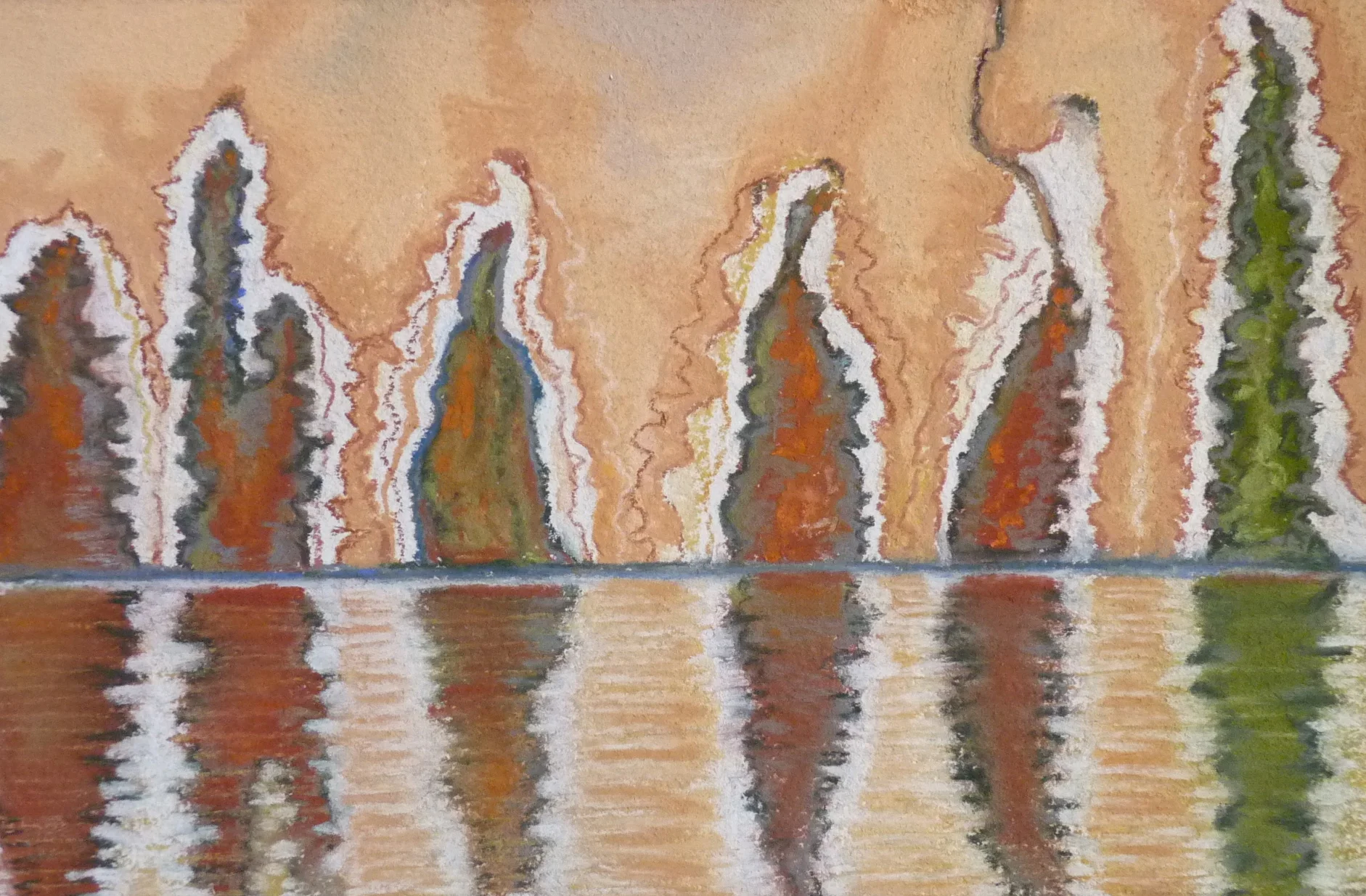
Seep No. 1 - 2014
This run-in with the seeps got me started on a years-long project called, wait for it, the Seeps Project. The majority of the images I've done so far are from the Dirty Devil, particularly the last 12 miles or so of this previously inundated little river that only runs a bit in the cold, dark months and whenever it decides to rain big in the desert. I’ve done a decent job of being out there a couple three times a year for the last ten years or so in high, moderate, low, and stupid low flows.
Today I wanted to go through a few of these images and give you an idea of what someone like me sees when traveling through a place like this.
And how someone like me feels in a place like this, of being in it and being present in it. Being inspired by it. And amassing a certain kind of visceral knowledge of the place that can sometimes, I would argue, be easier to convey to other people that are unfamiliar with it than the sciency stuff. How this emotional response can hit folks in a spot that makes them care about the place and its future. And maybe get involved.
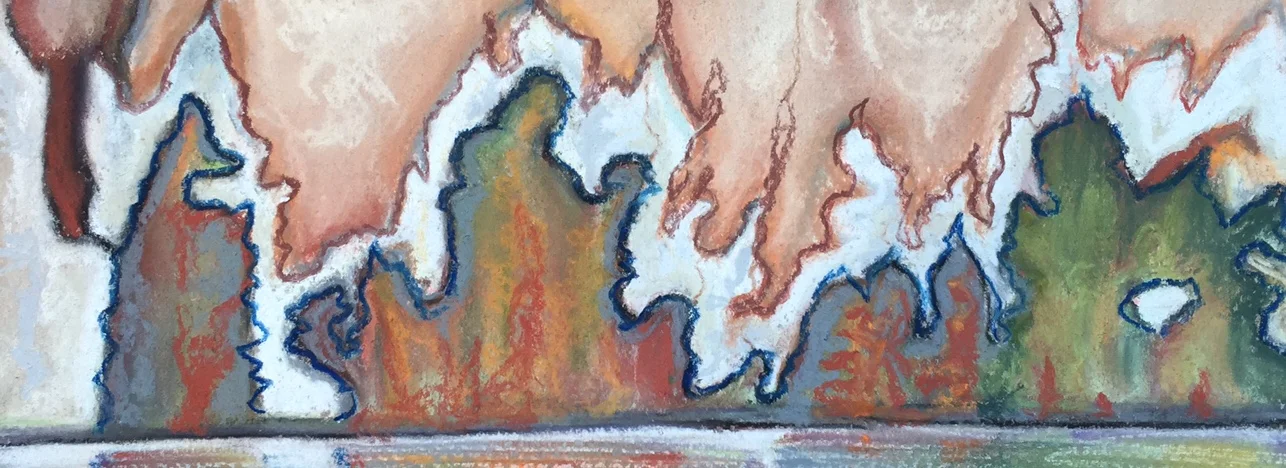
Seep No. 2 - 2015
That first trip was so nice we had to do it twice. I was excited the whole time to get to the seeps section. I did this one on-the-spot on that second trip.

Seep No. 3 (Another Pioneer) - 2015
My time with the Dirty Devil seeps encouraged me to get out and seek out seeps in other spots. This is one of the seeps on Gray Canyon of the Green River just below Coal Creek rapid on river left. There’s a strong scent of sulphur here.
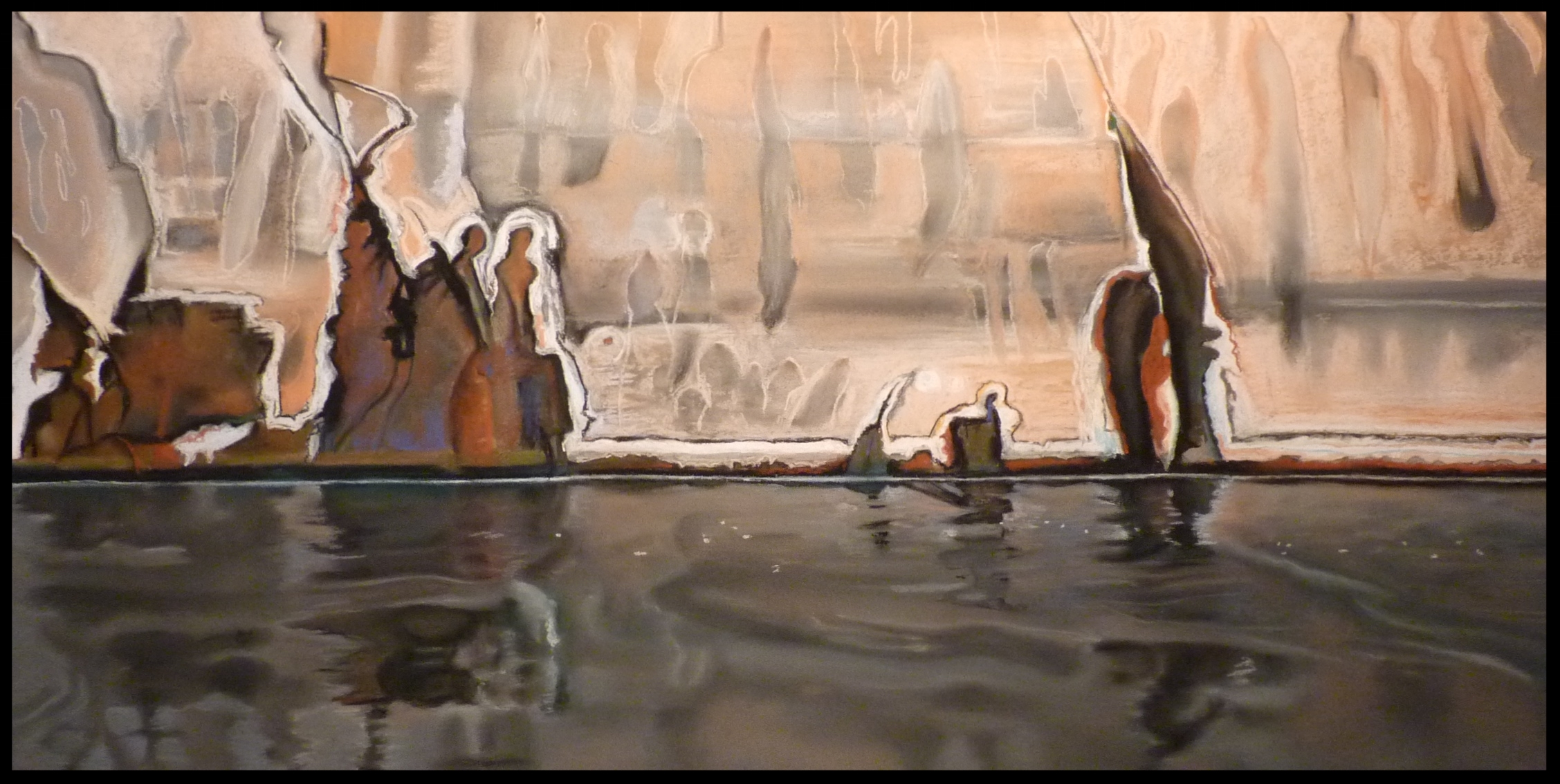
Seep No. 4 (A Pause to See) - 2015
This one deals with an issue that had me fired up at the time. The LDS church had announced that people in same-sex marriages would be classified as apostates, and that children of those marriages had to disavow same-sex relationships in order to be baptized. There are three groupings of figures here. On the right is the Church with a capital C. On the left is the parental unit, and the third, in the center, is the child. Each set of figures also has what I see as its belief structure.
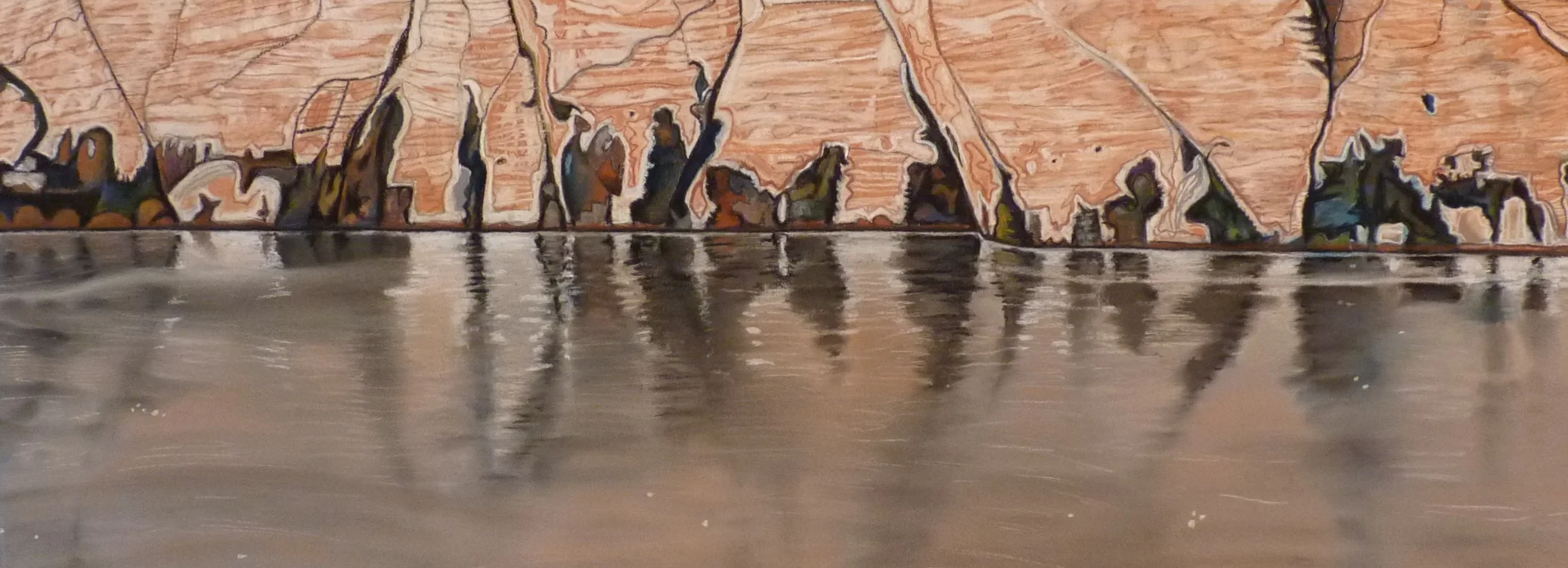
Seep No. 5 (Only a Handsome Animal) - 2015
Lots of human and animal figures, and most of the animals are being subjugated. On a related note, I became a vegetarian around this time.

Seep No. 10 (Tiger Wall) - 2016
I took an artistic break from the Dirty Devil, and did some seeps from the Yampa. There is a great set of seeps at the base of Tiger Wall at very low flows.
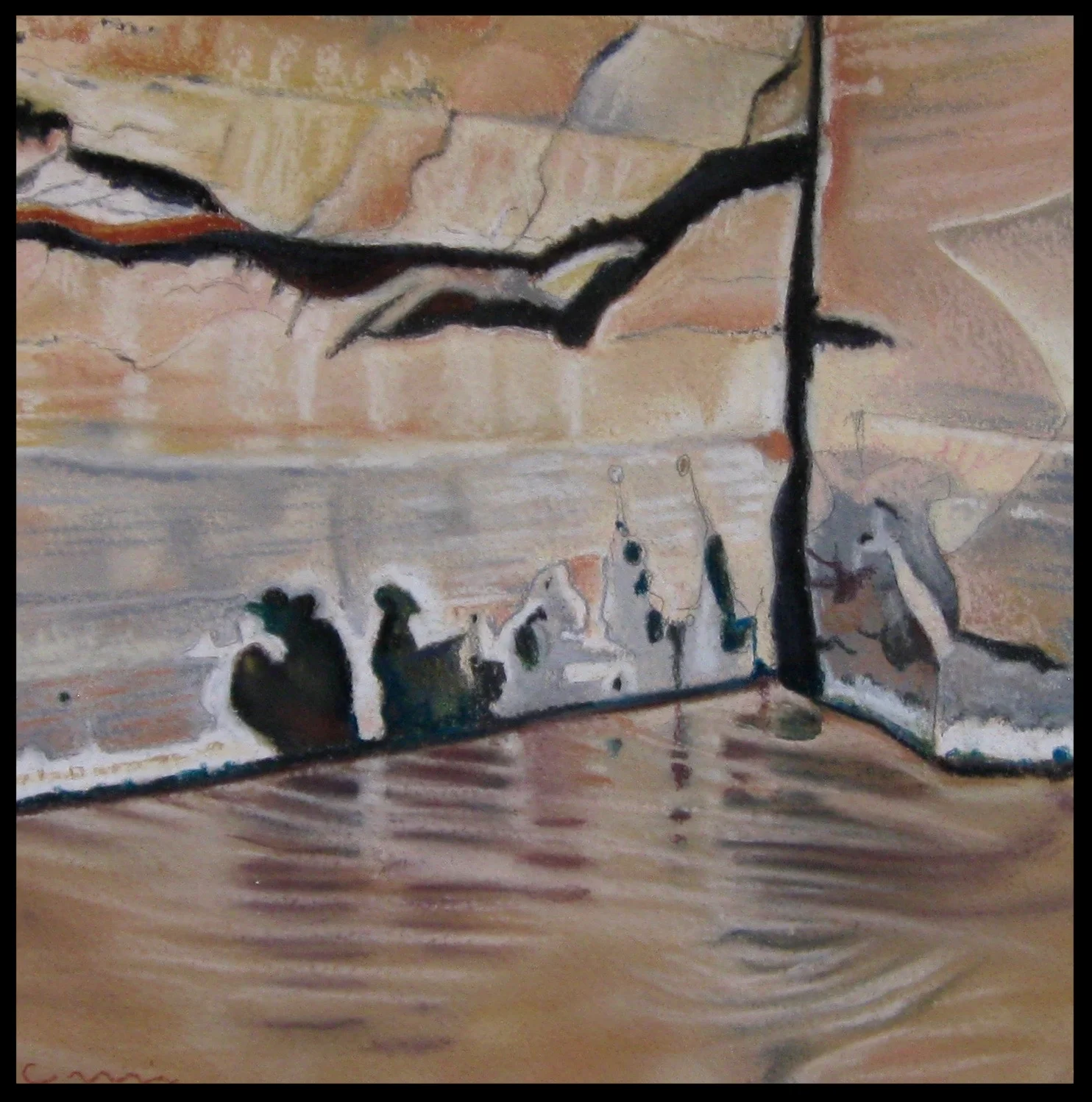
Seep No. 11 (Isolation) - 2017
Back to the Dirty Devil. This one explores the feeling of having people around, but feeling alienated, not belonging, isolated.

Seep No. 13 (Fluid Conversation) - 2018
The seeps sometimes have striking ghost images from previously active seeps.

Seep No. 14 (Birds are Singing to Calm Us Down - 2019
We’ve built a crazy world. There is always a more calming, more sane option available to us, and that’s the simplicity of the natural world. There’s this isolated and sterile figure here, but a whole world of interesting things there in the background, just waiting for someone to break from our modern distractions and have a real experience.

Seep No. 15 (Ascension) - 2020
Lots of dark thoughts around this time, lots of talk about death. More ghost images here, and a figure that appears to be traveling to a different realm.
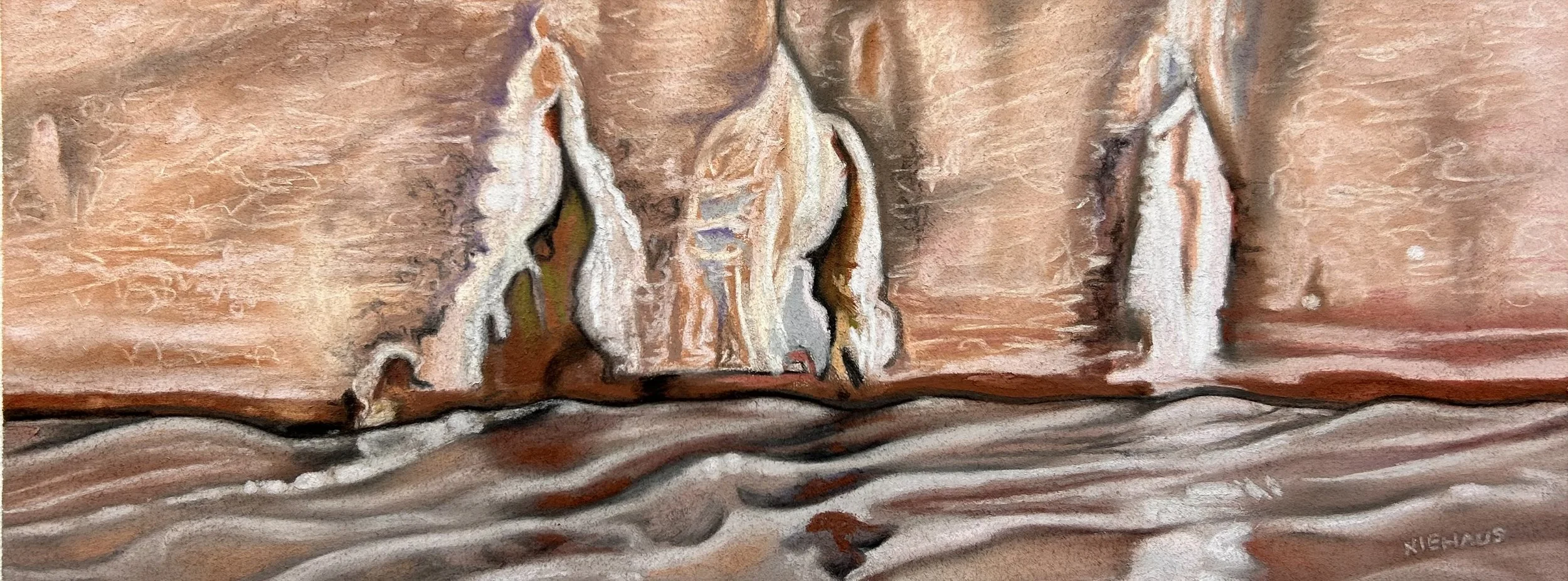
Seep No. 17 (Upstream Travel) - 2025
Adulting is hard. Raising a kid is hard. Staying positive in a world that is full of stress and strife is hard. Sometimes it takes a whole lot of energy to move forward just a little bit.
————
I find that these recovery zones, whether on the Colorado, the Escalante, the San Juan, or the mighty Dirty Devil, provide a fascinating headspace to be in, since they were, not that long ago, deliberately fucked up by people, but are trying their best to heal. There’s a perception out there that these places are forever ruined, despite photos and documents that are out there that prove otherwise (thanks to the efforts of the fine people here today), that it's just a wasteland, that it’s gonna be a wasteland, and it's forever fucked, so what’s the point in caring or doing anything about it.
But it’s not like that. You can feel the power of nature, sometimes subtle, sometimes aggressive, in these places, getting things back to the way they need to be. You can feel it in a willow and cottonwood grove in a place where there was, you know, 40 feet of nasty water. Count the heron nests. Listen to the beaver slap. Close your eyes and focus on the sound of moving water, river music, in a place where there wasn't flow not that long ago.
Because once you feel the current in a place that has had none due to our choices in the past, you know what’s right. You know what the place needs now and in the future. And you know you need to get more people inspired to make sure this place starts getting the respect it deserves.
Orienting oneself to ephemeral phenomena allows you to see that everything is ephemeral, even something as daunting as a dam. It just depends on your timeframe. And that - at least for me - is a source of optimism, excitement, and inspiration.